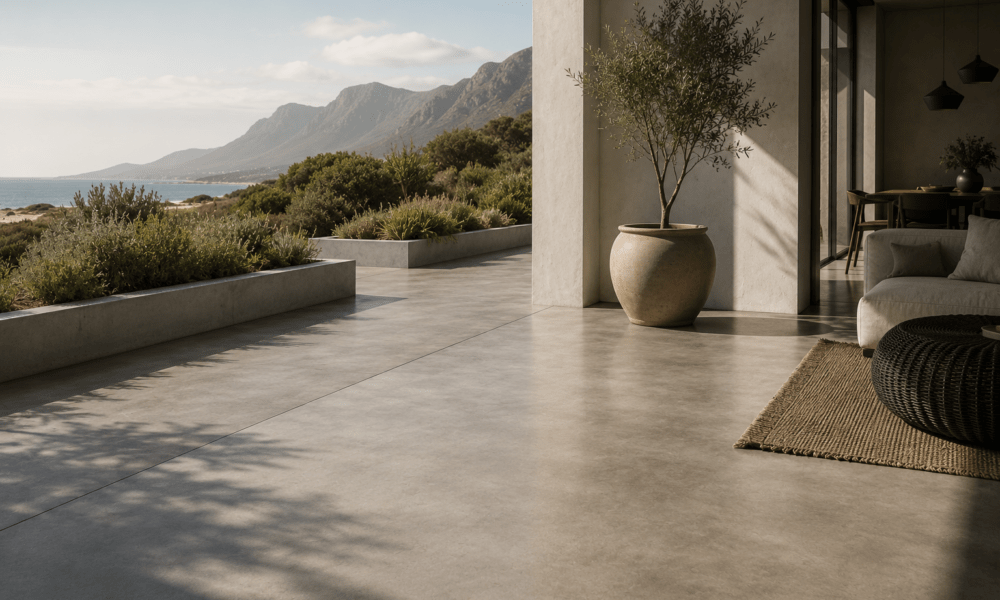
Cape Town’s property landscape includes modern homes, apartments, restaurants, offices, retail spaces, workshops and large industrial facilities. Concrete flooring in Cape Town offers a practical solution for many of these environments because it can handle everyday wear while providing a versatile foundation for different interior and exterior designs.
Modern concrete flooring is no longer limited to basic industrial spaces. With options such as polished, coloured, exposed aggregate, acid-washed and decorative finishes, concrete floors can provide both durability and visual appeal.
Whether you are renovating a home, upgrading a commercial property or developing an industrial facility, concrete flooring can deliver long-term value when the correct system is selected and professionally installed. In this guide, we explore the benefits, applications, finishes, installation process, maintenance and considerations for choosing concrete flooring in Cape Town and across the Western Cape.
Why Choose Concrete Flooring in Cape Town?
Concrete flooring in Cape Town remains a popular choice because of its strength, versatility and ability to suit different environments. Modern installation and finishing techniques also allow property owners to create attractive surfaces for residential, commercial and industrial applications.
A professionally installed concrete floor can offer:
- Excellent durability
- Long-term performance
- Easy maintenance
- A strong and stable surface
- Versatile design options
- Resistance to regular foot traffic
- Customisable colours and finishes
- Suitable options for indoor and outdoor areas
Concrete flooring can be particularly useful in spaces where the floor needs to withstand regular use without compromising the appearance of the property.
For example, a contemporary home can combine polished concrete flooring with bespoke cabinetry and doors from Antherian to create a clean, modern interior.
What Is Concrete Flooring?
Concrete flooring uses a cement-based mixture to create a strong and stable floor surface. Depending on the project, the finished surface can be ground, polished, coloured, sealed or treated to achieve a specific appearance and performance level.
Common concrete floor treatments include:
- Grinding
- Polishing
- Sealing
- Staining
- Colouring
- Acid washing
- Exposed aggregate
- Decorative finishes
- Protective coatings
As a result, concrete flooring does not have to look like a basic grey industrial surface. Instead, the finish can be selected according to the style, traffic levels and practical requirements of the property.
The final result depends on factors such as the concrete mix, substrate condition, installation method, curing process and selected surface treatment. Professional assessment is therefore important before selecting a concrete flooring system.
Benefits of Concrete Flooring
There are several reasons why concrete flooring in Cape Town continues to be used across residential, commercial and industrial properties. The correct specification can help a floor cope with regular traffic, environmental conditions and the demands of the space.
Durable Concrete Flooring
One of the main advantages of concrete flooring is durability. Concrete provides a strong surface that can withstand substantial everyday use, making it suitable for garages, warehouses, workshops, commercial buildings and industrial facilities.
A properly installed and maintained concrete floor can cope with regular pedestrian and vehicle traffic. However, heavy-duty environments may require additional reinforcement or a specialised specification.
Easy-to-Maintain Concrete Floors
Concrete floors can also simplify everyday cleaning. Many finishes create a continuous surface with fewer joints where dirt can accumulate compared with some traditional flooring options.
Routine maintenance can include:
- Sweeping
- Dust mopping
- Damp mopping
- Cleaning spills promptly
- Periodic resealing where required
Maintenance requirements depend on the selected finish and the environment. An industrial floor may require a different maintenance routine from a polished residential floor.
Versatile Concrete Flooring Designs
Modern concrete flooring provides considerable design flexibility. Polished concrete can create a refined contemporary appearance, while coloured and decorative concrete can provide a more distinctive finish.
Different aggregates, textures, colours and surface treatments can change the appearance of the finished floor. This versatility allows concrete to complement minimalist, industrial, contemporary and decorative architectural styles.
Concrete Flooring for High-Traffic Areas
Busy properties need floors that can handle regular use. Concrete flooring in Cape Town can therefore be suitable for warehouses, workshops, retail spaces, commercial buildings and other high-traffic environments.
Businesses planning warehouse or industrial spaces can also consider storage and equipment requirements alongside the flooring. West Coast Suppliers supplies shelving, racking, material-handling equipment and other industrial products that can support commercial and warehouse projects.
Where Can Concrete Flooring Be Used?
One of the biggest advantages of concrete flooring is its versatility. It can be used across residential, commercial and industrial properties, provided the flooring system is correctly specified for the environment.
Residential Concrete Flooring
Concrete flooring in Cape Town homes can create a modern, clean and durable appearance. It works particularly well in contemporary properties where homeowners want a practical floor with a minimalist aesthetic.
Popular residential applications include:
- Garages
- Kitchens
- Living areas
- Home offices
- Entertainment areas
- Covered patios
- Workshops
- Utility rooms
- Outdoor areas
Polished and decorative concrete can also complement modern furniture, cabinetry and architectural features.
For homeowners creating a contemporary interior, concrete floors can work particularly well alongside custom interior solutions. For example, Antherian offers bespoke cupboards and doors that can complement a modern concrete flooring aesthetic.
Commercial Concrete Flooring
Commercial properties often require flooring that looks professional while coping with regular foot traffic. Concrete flooring can suit a wide range of commercial environments, including:
- Retail stores
- Restaurants
- Cafés
- Offices
- Hotels
- Showrooms
- Reception areas
- Salons
- Workshops
- Commercial kitchens
Decorative concrete finishes can also help businesses create a distinctive environment without relying solely on tiles or other conventional flooring materials.
Industrial Concrete Flooring
Industrial environments often require particularly strong flooring. For this reason, industrial concrete flooring remains a common choice for warehouses, factories and workshops.
Applications can include:
- Warehouses
- Distribution centres
- Manufacturing facilities
- Engineering workshops
- Automotive workshops
- Factories
- Storage facilities
- Logistics centres
- Industrial yards
The concrete specification should match the expected loads and traffic. Forklifts, heavy machinery and vehicles can place significant demands on a floor, so the intended use should be considered before selecting the appropriate system.
Popular Concrete Flooring Finishes
Concrete flooring is no longer limited to a basic grey finish. Different finishing techniques can change both the appearance and performance of the surface.
Polished Concrete Flooring
Polished concrete creates a smooth and refined appearance by mechanically grinding, honing and polishing the concrete surface.
This type of concrete flooring can work particularly well in:
- Modern homes
- Retail stores
- Restaurants
- Offices
- Showrooms
- Hotels
The level of polish can vary according to the desired appearance. The natural characteristics of the concrete can also contribute to a distinctive finish.
Coloured Concrete Flooring
Colour can transform the appearance of a concrete floor. Suitable pigments and colouring techniques can create warmer, neutral or contemporary shades.
Coloured concrete flooring can be useful where a standard grey floor does not suit the property’s design.
Acid-Washed Concrete
Acid washing and staining can create variations in tone and character across a concrete surface. This can produce a more natural and textured appearance.
Acid-washed concrete can suit decorative applications where the property owner wants a distinctive finish.
Exposed Aggregate Concrete
Exposed aggregate reveals selected stones and aggregates within the concrete. The finished surface can therefore provide additional texture and visual character.
Exposed aggregate can work particularly well for:
- Patios
- Walkways
- Driveways
- Outdoor entertainment areas
- Architectural features
Decorative Concrete Flooring
Decorative concrete flooring provides additional options for property owners who want more than a standard finish. Depending on the project, decorative techniques can introduce different textures, colours and visual effects.
Decorative concrete can also create continuity between indoor and outdoor areas, helping different parts of a property feel connected.
Concrete Flooring Installation Process
The installation process depends on the type of floor, the existing substrate and the intended use of the space. Proper preparation remains one of the most important factors in achieving a durable result.
Step 1: Assess the Existing Surface
Firstly, the contractor should inspect the existing surface and surrounding conditions. This assessment can identify cracks, damage, contamination, moisture and other potential problems.
The findings help determine which preparation and installation methods are appropriate for the project.
Step 2: Prepare the Substrate
The next stage involves preparing the surface. Depending on its condition, preparation may include cleaning, grinding, repairs or removing unsuitable materials.
The substrate needs to provide a suitable base for the selected concrete flooring system.
Step 3: Complete Repairs
Cracks and damaged areas should be addressed before the flooring system progresses. Existing defects can otherwise affect the final appearance and performance of the floor.
The contractor should assess the cause and severity of cracks before selecting the appropriate repair method.
Step 4: Install the Concrete Flooring System
The contractor then installs the specified concrete flooring system. Factors such as thickness, reinforcement, mix design and application method can influence the final result.
Requirements vary according to whether the floor is intended for residential, commercial or industrial use.
Step 5: Cure the Concrete
Concrete requires appropriate curing before certain finishing stages can take place. The installation team should therefore follow the correct curing process for the selected system.
Once the concrete reaches the required condition, the contractor can proceed with grinding, polishing, colouring, sealing or another specified treatment.
Step 6: Apply the Final Finish
Finally, the selected surface treatment is applied. The project may require polishing, sealing, colouring, staining or another decorative finish.
The final treatment helps achieve the desired combination of appearance, durability and functionality.
How Long Does Concrete Flooring Last?
The lifespan of concrete flooring depends on several factors, including:
- Concrete quality
- Substrate preparation
- Installation workmanship
- Floor thickness
- Reinforcement
- Traffic levels
- Environmental conditions
- Maintenance
- Surface treatment
A properly specified and maintained concrete floor can provide many years of service. However, heavy industrial traffic can place greater demands on the surface and may require repairs or maintenance sooner.
It is therefore important to consider the complete flooring system rather than focusing only on an estimated lifespan.
Concrete Flooring for Cape Town’s Climate
Cape Town experiences changing weather conditions throughout the year. Concrete flooring in Cape Town should therefore be selected according to the property’s location, exposure and intended application.
Outdoor concrete surfaces may experience sunlight, rain and temperature changes. Indoor floors can face different challenges, including foot traffic, spills and cleaning requirements.
For this reason, contractors should consider the environment when selecting the concrete mix, finish and protective treatment.
Why Professional Concrete Flooring Installation Matters
Searching for concrete flooring near me is only the first step. Property owners should also choose an experienced contractor who understands substrate preparation, concrete installation and finishing.
A professional contractor should be able to assess the site and recommend a suitable flooring system. The contractor should also explain the preparation, installation, curing and finishing process.
When comparing concrete flooring contractors, consider:
- Previous projects
- Experience with similar applications
- Surface preparation methods
- Concrete specifications
- Finishing techniques
- Maintenance requirements
- Project references
- Reviews and reputation
The lowest quotation does not always provide the best value. Poor preparation or an unsuitable specification can result in cracking, surface problems or premature repairs.
Concrete Flooring Services Across Cape Town and the Western Cape
Atomic Flooring provides flooring solutions across Cape Town and surrounding areas, with services extending into locations across the Western Cape. Its flooring solutions include concrete, cement, microcement, epoxy and polished concrete options.
Service areas can include:
- Cape Town CBD
- Atlantic Seaboard
- Southern Suburbs
- Northern Suburbs
- Century City
- Milnerton
- Montague Gardens
- Epping
- Bellville
- Durbanville
- Brackenfell
- Kuils River
- Somerset West
- Strand
- Gordon’s Bay
- Paarl
- Stellenbosch
- Wellington
- Malmesbury
- Atlantis
- Bloubergstrand
- Table View
For more information about available flooring solutions, visit Atomic Flooring. You can also explore the company’s concrete flooring solutions and service locations for more information.
Why Businesses Choose Concrete Flooring
Commercial and industrial businesses often need flooring that can handle regular use while maintaining a professional appearance. Concrete flooring remains an attractive option because it combines durability, versatility and relatively straightforward maintenance.
Key advantages include:
- Durability
- Easy maintenance
- Long-term value
- Versatile finishes
- Suitability for high-traffic areas
- Options for large floor areas
- Professional appearance
Concrete flooring can provide a practical foundation for warehouses, workshops, restaurants, offices and commercial facilities.
When businesses plan a complete facility, flooring represents only one part of the project. Storage, shelving and material-handling equipment can also affect how the space operates. West Coast Suppliers provides industrial equipment and storage solutions that can support these requirements.
How to Maintain Concrete Flooring
Proper maintenance can help preserve the appearance and performance of concrete flooring. Fortunately, routine cleaning is generally straightforward.
A basic maintenance programme can include:
- Sweep or dust mop the floor regularly.
- Remove dirt and debris before they accumulate.
- Clean spills promptly.
- Damp mop the surface using a suitable cleaning solution.
- Avoid harsh chemicals that may damage the selected finish.
- Reseal the surface where required.
- Address cracks or surface damage before problems become more extensive.
Industrial floors may require more frequent maintenance depending on traffic levels, equipment and the working environment.
Frequently Asked Questions About Concrete Flooring
Is Concrete Flooring Suitable for Homes?
Yes. Concrete flooring can work well in modern homes, particularly in garages, kitchens, living areas, entertainment spaces and covered patios. Polished and decorative finishes can also create a sophisticated appearance.
Is Concrete Flooring Suitable for Commercial Properties?
Yes. Concrete flooring can suit offices, restaurants, retail spaces, showrooms, hotels and workshops because of its durability and versatility.
Can Concrete Floors Be Coloured?
Yes. Depending on the selected system, suitable colouring techniques can create different shades and decorative effects.
Is Polished Concrete Slippery?
Polished concrete can become slippery under certain wet conditions. The appropriate finish and surface treatment should therefore be selected according to the property’s traction requirements.
How Do I Maintain a Concrete Floor?
Regular sweeping, dust mopping and suitable damp cleaning can help maintain concrete flooring. Some finishes may also require periodic sealing or other maintenance.
How Do I Choose a Concrete Flooring Contractor in Cape Town?
Look for an experienced contractor who understands substrate preparation, concrete installation and finishing. Ask about previous projects, specifications, preparation methods, warranties where applicable and maintenance requirements.
Final Thoughts on Concrete Flooring in Cape Town
If you are searching for concrete flooring in Cape Town, a professionally installed concrete floor can provide a durable and versatile solution for residential, commercial and industrial properties.
From modern homes and garages to restaurants, offices, warehouses and workshops, concrete flooring can adapt to many different applications. The range of available finishes also means property owners can achieve both practical performance and an attractive appearance.
Successful concrete flooring depends on proper planning, suitable materials, careful surface preparation and professional installation. Once the correct system has been selected, regular maintenance can help preserve the floor and its appearance for years to come.
Ready to explore concrete flooring options for your property? Contact Atomic Flooring to discuss your project and arrange a professional callout.
Other Articles
Epoxy Flooring Near Me in Cape Town: The Complete Guide