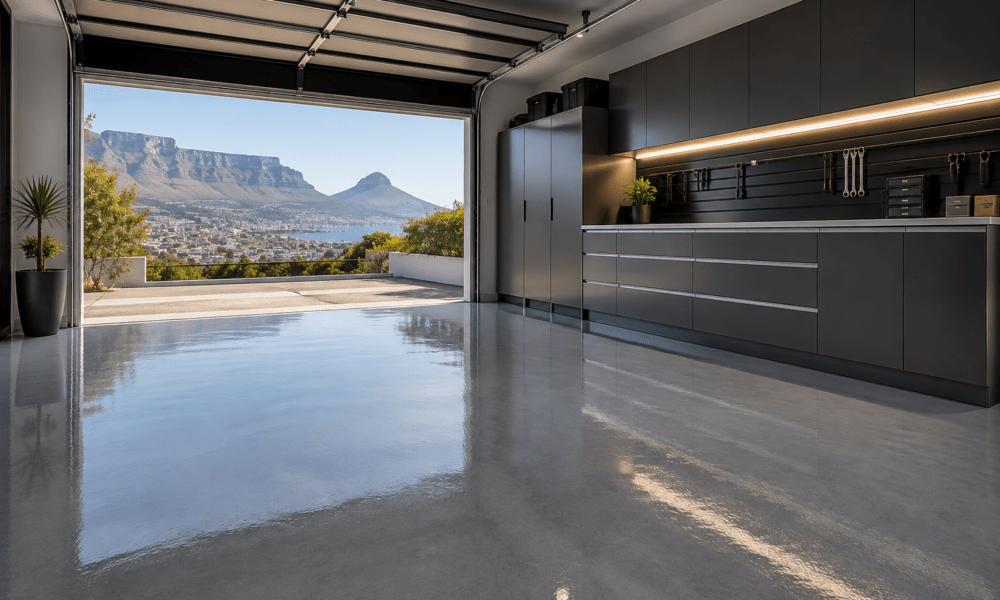
Cape Town’s property landscape ranges from luxury homes and apartments to restaurants, offices, retail spaces, workshops and large industrial facilities. As a result, every environment has different flooring requirements, while epoxy flooring provides a versatile solution that can be customised for both appearance and performance.
In this guide, we explore the benefits of epoxy flooring, popular design options, installation, maintenance and the areas across the Western Cape where epoxy flooring can work effectively. Whether you own a home, manage a commercial property or operate an industrial facility, selecting the right floor can make a significant difference.
Why Choose Epoxy Flooring in Cape Town?
Cape Town’s coastal environment, seasonal rainfall, changing temperatures and busy commercial areas can place significant demands on flooring. Fortunately, a professionally installed epoxy system can provide a hard-wearing surface for everyday use.
Furthermore, epoxy flooring offers several practical benefits, including:
Excellent durability
Seamless finishes
Easy cleaning and maintenance
Resistance to moisture
Resistance to many chemicals
Customisable colours and designs
Professional appearance
Long-term value
For this reason, homeowners, businesses and industrial property owners often choose epoxy flooring when they want a practical combination of performance and visual appeal. In addition, the wide range of available finishes allows property owners to select a design that complements the surrounding space.
Flooring should also complement the overall interior design during renovations and new developments. For example, homeowners can combine durable epoxy flooring with custom cupboards and architectural finishes from Antherian to create a cohesive interior.
What Is Epoxy Flooring?
Epoxy flooring combines epoxy resin with a specialised hardener. Once these materials react, they create a strong coating that bonds to properly prepared concrete.
Unlike conventional floor paint, a professional epoxy flooring system creates a durable surface over the existing substrate. Moreover, installers can incorporate primers, decorative materials and protective topcoats according to the requirements of the project.
Consequently, epoxy flooring works well in a wide range of environments, such as:
Residential garages
Home gyms
Workshops
Retail stores
Restaurants
Offices
Hotels
Medical facilities
Warehouses
Manufacturing facilities
Automotive workshops
Distribution centres
Because of this versatility, property owners can select an epoxy system according to expected traffic, appearance and performance requirements.
Why Epoxy Flooring Works Well in the Western Cape
The right flooring system needs to suit the environment where it will operate. Therefore, flooring professionals can specify epoxy systems for many Cape Town residential, commercial and industrial applications.
Moisture Resistance
Epoxy creates a protective coating over correctly prepared concrete. As a result, the finished floor can become easier to clean and handle everyday moisture exposure.
However, installers need to test moisture conditions and prepare the concrete correctly before installation. This becomes particularly important where moisture moves through the concrete slab.
Designed for Heavy Use
Furthermore, flooring professionals can specify epoxy systems for environments that experience substantial traffic and wear.
Depending on the selected system, epoxy flooring can handle areas exposed to:
Pedestrian traffic
Vehicle traffic
Forklifts
Machinery
Abrasion
Impact
Chemical spills
Importantly, the flooring professional should select the system according to the specific demands of the property. For instance, an industrial warehouse may require a different specification from a residential garage.
Businesses sourcing industrial equipment, warehouse products or material-handling solutions can also explore West Coast Suppliers for commercial and industrial requirements in the Western Cape.
Easy to Maintain
Another major advantage of seamless epoxy flooring involves straightforward cleaning. Because the surface contains fewer joints and seams, it can also reduce the areas where dirt and debris collect.
In general, routine maintenance includes:
Sweeping or dust mopping
Regular removal of dirt and debris
Occasional damp mopping
Prompt cleaning of spills
Using suitable, non-aggressive cleaning products
In addition, regular maintenance can help preserve the appearance and performance of the floor over time.
Where Can Epoxy Flooring Be Installed?
One of the main reasons epoxy remains popular involves its versatility. In fact, flooring professionals can use epoxy systems across residential, commercial and industrial environments.
Residential Epoxy Flooring
Homeowners can use epoxy flooring in a variety of areas, including:
Garages
Home gyms
Workshops
Laundry rooms
Entertainment areas
Storage rooms
Covered patios
Utility areas
Additionally, decorative epoxy systems can create sophisticated finishes for contemporary residential interiors.
When designing or renovating a modern home, flooring forms only one part of the overall finish. For instance, homeowners can pair an epoxy floor with bespoke doors, cupboards and interior solutions from Antherian to create a cohesive contemporary look.
At the same time, different epoxy colours, textures and decorative finishes can complement existing furniture and interior features.
Commercial Epoxy Flooring
Similarly, commercial environments often need flooring that looks professional while handling constant use.
Popular applications include:
Retail stores
Restaurants
Coffee shops
Hotels
Reception areas
Corporate offices
Medical practices
Salons
Showrooms
Shopping centres
As a result, a well-designed epoxy floor can contribute to a clean, modern appearance while making ongoing maintenance easier. Moreover, businesses can select colours and finishes that complement their branding or interior design.
For industrial environments, flooring often needs to withstand heavy traffic, impact, chemicals and equipment. Consequently, the flooring system requires careful specification before installation.
Epoxy flooring works well in:
Warehouses
Distribution centres
Manufacturing plants
Engineering workshops
Automotive facilities
Logistics centres
Factories
Storage facilities
For demanding industrial environments, flooring professionals should select the coating thickness, resin system, aggregate and protective layers according to the site’s requirements. In this way, the finished system can better match the conditions of the facility.
Popular Epoxy Flooring Design Options
Modern epoxy flooring design goes far beyond basic grey floors. Instead, property owners can choose from numerous finishes and colours to create a distinctive appearance.
Furthermore, decorative flooring can transform practical spaces into visually appealing environments.
Metallic Epoxy Flooring
Metallic epoxy creates flowing, three-dimensional patterns that can resemble natural stone or marble. Consequently, this finish can provide a luxurious alternative to traditional decorative flooring.
For this reason, metallic finishes can work particularly well in:
Luxury homes
Hotel interiors
Reception areas
Restaurants
Showrooms
High-end retail environments
Each metallic installation can produce a unique pattern. Therefore, this finish gives property owners a highly customised result. In addition, metallic epoxy can create a strong visual feature without requiring traditional stone flooring.
Decorative Flake Flooring
Decorative flakes create a textured visual effect within the epoxy system. As a result, this finish can provide both a practical appearance and a distinctive design.
Flake flooring remains particularly popular for:
Garages
Workshops
Gyms
Utility areas
Commercial spaces
Moreover, property owners can select different flake combinations to create subtle or distinctive designs. For example, neutral flakes can create a refined finish, whereas contrasting colours can produce a more dramatic appearance.
Solid-Colour Epoxy
Solid-colour epoxy creates a clean and minimalist appearance. In particular, this option works well when the priority involves a consistent colour and practical surface rather than a decorative pattern.
Therefore, businesses and property owners often choose solid-colour epoxy for commercial, industrial and utility areas. At the same time, a wide selection of colours allows the floor to complement the surrounding environment.
Quartz Epoxy Flooring
Quartz systems incorporate graded aggregate into the flooring system. Depending on the specification, the aggregate can increase texture and provide additional slip resistance.
Consequently, quartz flooring can work well in areas where durability and traction matter. For example, commercial and industrial spaces may benefit from a textured finish where regular foot or vehicle traffic occurs.
The Professional Epoxy Flooring Installation Process
The quality of an epoxy floor depends heavily on preparation. Therefore, flooring professionals must prepare the substrate correctly before applying the coating.
Step 1: Concrete Assessment
Firstly, a flooring professional should assess the existing floor before work begins. This assessment helps identify potential problems that could affect the finished result.
The assessment can include:
Existing coatings
Concrete condition
Cracks and damage
Contamination
Surface strength
Moisture conditions
Existing joints
Step 2: Surface Preparation
Next, the installation team prepares the concrete surface. Depending on the condition of the substrate, the team may use mechanical grinding or another suitable preparation method.
This process removes contaminants and creates the correct surface profile for adhesion. As a result, the epoxy can bond more effectively with the prepared concrete.
Step 3: Repairs
Afterwards, the installation team repairs cracks, damaged concrete and other defects before applying the coating system.
In addition, the team selects the appropriate repair method according to the type and severity of each defect. This approach helps create a more suitable surface for the next stages of the installation.
Step 4: Primer Application
Then, the installer may apply a compatible primer to improve adhesion and prepare the concrete for subsequent layers.
Depending on the system, the primer can also help create a consistent base for the epoxy coating.
Step 5: Epoxy Application
Once the surface is ready, the installation team applies the selected epoxy system according to the manufacturer’s specifications.
Depending on the design, the team may apply multiple layers or incorporate decorative flakes, metallic pigments or aggregate. Consequently, the final appearance and performance will depend on the chosen system and installation method.
Step 6: Protective Topcoat
Finally, the installer may add a compatible protective topcoat where required.
Depending on the application, a polyurethane or polyaspartic topcoat can provide additional protection against wear, scratching and environmental exposure. As a result, the complete flooring system can offer additional durability in demanding environments.
How Long Does Epoxy Flooring Last?
Several factors influence the lifespan of an epoxy floor, including:
Quality of the concrete substrate
Surface preparation
Product quality
Installation workmanship
Traffic levels
Chemical exposure
Maintenance
Environmental conditions
In general, a properly designed and installed system can provide many years of service. However, high-traffic industrial environments may require maintenance or recoating sooner than lightly used residential areas.
Therefore, property owners should consider the complete flooring system rather than focusing only on a quoted lifespan. The installer should specify the system according to the property’s intended use.
Why Professional Installation Matters
Searching for epoxy flooring near me in Cape Town is only the first step. Equally important, choosing an experienced flooring contractor can make a significant difference to the final result.
A professional installer should assess the substrate, recommend an appropriate system and explain the preparation and installation process. Furthermore, an experienced contractor should understand how different flooring systems perform under different conditions.
When comparing contractors, consider:
Previous completed projects
Experience with similar applications
Surface preparation methods
Products and systems being specified
Warranty information
Project references
Reviews and reputation
Understanding of your property’s requirements
Ultimately, the cheapest quotation is not necessarily the most cost-effective solution. Poor preparation can lead to premature coating failure and additional repair costs. For this reason, quality workmanship should remain a key consideration when comparing flooring contractors.
Areas We Serve Across Cape Town and the Western Cape
Professional epoxy flooring can work across a wide range of locations, including:
Cape Town CBD
Atlantic Seaboard
Southern Suburbs
Northern Suburbs
Century City
Milnerton
Montague Gardens
Epping
Bellville
Durbanville
Brackenfell
Kuils River
Somerset West
Strand
Gordon’s Bay
Paarl
Stellenbosch
Wellington
Malmesbury
Atlantis
Bloubergstrand
Table View
Whether you’re a homeowner, developer, architect, contractor or business owner, you should select the flooring system around the property’s specific requirements.
In addition, construction, interior and property development projects often involve several suppliers and specialists. Businesses working across these sectors can also explore Summit & Solt as part of their wider project supply chain.
Why Businesses Choose Epoxy Flooring
For commercial and industrial properties, flooring can affect both appearance and operational efficiency. Therefore, businesses often consider durability and maintenance alongside aesthetics when selecting a flooring system.
For this reason, epoxy remains a popular choice because it can provide:
High durability
A professional appearance
Easier cleaning
Seamless surfaces
Chemical resistance
Good light reflectivity
Long-term performance
Reduced maintenance requirements
In busy facilities, durable flooring can also help reduce disruption associated with frequent repairs and replacement. Furthermore, a clean and well-maintained floor can contribute to a more professional working environment.
How to Maintain an Epoxy Floor
Good maintenance can help preserve the appearance and performance of an epoxy floor. Fortunately, maintaining epoxy flooring does not usually require a complicated routine.
A simple maintenance routine should include:
Firstly, remove loose dirt and dust regularly.
Next, clean spills as soon as possible.
Then, mop the floor using an appropriate mild cleaning solution.
In addition, avoid harsh chemicals unless they are confirmed as compatible with the coating.
Where necessary, use suitable protective pads beneath equipment.
Finally, address damage before it spreads or exposes the substrate.
For industrial floors, property owners may need a more structured maintenance programme based on traffic and chemical exposure. Similarly, facilities with heavy vehicle or machinery use may require more frequent inspections.
Frequently Asked Questions
Is epoxy flooring suitable for Cape Town’s coastal climate?
Yes, epoxy flooring can suit many Cape Town applications when the installer selects the correct system and prepares the concrete properly. However, installers should assess moisture conditions before beginning the project.
Can epoxy flooring be installed in a garage?
Absolutely. Garages remain one of the most popular residential applications for epoxy flooring. In particular, decorative flake systems remain popular because they combine durability with a practical appearance.
Is epoxy flooring slippery?
A smooth epoxy finish can become slippery when wet. However, installers can incorporate anti-slip aggregates or textured finishes into the system to improve traction where required.
How do I clean epoxy flooring?
Regular sweeping or dust mopping followed by occasional damp mopping will generally keep an epoxy floor clean. Nevertheless, always use cleaning products that suit the specific coating system.
How do I choose an epoxy flooring contractor in Cape Town?
Look for an experienced contractor who demonstrates proper surface preparation, uses suitable flooring systems, provides examples of completed work and explains exactly what the quotation includes. Most importantly, the contractor should understand the requirements of your specific property.
Final Thoughts
If you’ve been searching for epoxy flooring near me in Cape Town, a professionally installed epoxy flooring system can provide an attractive, durable and practical solution for residential, commercial and industrial properties.
From stylish garages and contemporary homes to restaurants, retail spaces, offices and warehouses, epoxy flooring design can suit both the appearance and performance requirements of the space.
Ultimately, the most important factors include proper substrate assessment, thorough surface preparation, the correct flooring system and professional installation. With the right approach, epoxy flooring can deliver a seamless finish that remains easy to maintain while handling demanding everyday use.
Overall, choosing the right flooring system can provide long-term value for homeowners, businesses and industrial property owners across Cape Town and the Western Cape.
Ready to explore epoxy flooring options for your property? Contact Atomic Flooring to discuss your project and arrange a professional callout.